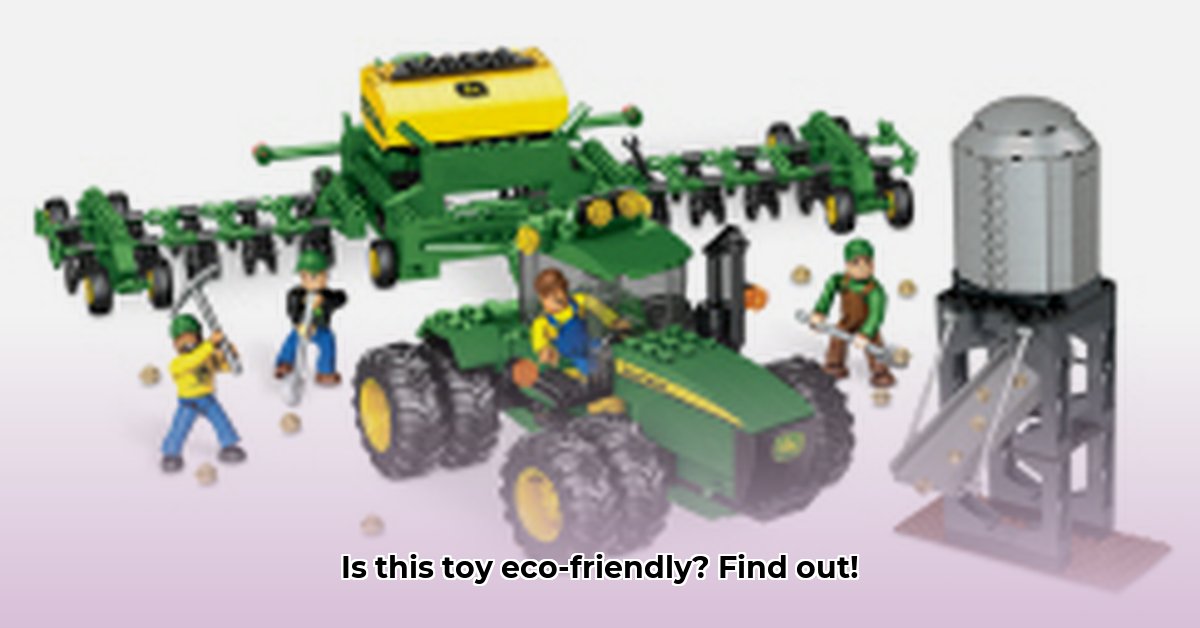
My four-year-old son, Liam, is captivated by his Mega Bloks John Deere tractor. Hours melt away as he constructs elaborate farm scenes, a testament to the toy's engaging design. But this isn't just a child's playtime; it's a microcosm of a larger conversation about sustainable toy manufacturing. This review delves into the Mega Bloks John Deere Tractor's sustainability, examining its durability, educational value, and the crucial—yet often absent—transparency surrounding its production. For more information on electric versions of similar tractors, check out this electric toy tractor.
Durability and Reusability: Built to Last?
The Mega Bloks John Deere Tractor is remarkably robust. Its sturdy blocks and well-designed construction suggest longevity, promising years of enthusiastic play. This inherent durability, arguably its strongest sustainability asset, directly combats the throwaway culture often associated with children's toys. The tractor even cleverly incorporates its blocks into a built-in storage system, simplifying cleanup and reducing the likelihood of lost pieces. Furthermore, its compatibility with other Mega Bloks lines dramatically extends its lifespan and potential play scenarios. But how durable is it compared to other similar toys? What materials contribute to this perceived longevity? Further investigation is needed.
Educational Value: Beyond the Farm
Beyond its inherent durability, the Mega Bloks John Deere Tractor offers considerable educational benefits. Building and rebuilding the tractor cultivates crucial skills. It strengthens fine motor skills, enhances hand-eye coordination, and stimulates problem-solving abilities. The realistic detailing inspires imaginative play, transforming playtime into a rich, experiential learning opportunity. However, a crucial element must be considered for sustainability: the knowledge of its impact on the environment. What is the manufacturing process like? Are there toxic components released during manufacture?
Transparency and the Sustainability Gap: The Missing Pieces
This is where the narrative takes a concerning turn. While the toy's durability suggests an element of sustainability, the manufacturer provides minimal information regarding material sourcing, manufacturing processes, and packaging. Online listings (Amazon, eBay) offer little insight into the specific plastics used, their origin, or the environmental impact of their production. This lack of transparency significantly hinders a comprehensive sustainability assessment. It's akin to judging a recipe without knowing its ingredients—a recipe that, otherwise, looks delightful.
"The lack of transparency in the toy industry is a major obstacle to making informed decisions," states Dr. Emily Carter, Professor of Chemical and Biomolecular Engineering at Princeton University. "Consumers have a right to know the full environmental cost of the products they buy."
This lack of information raises critical questions: What plastics compose the tractor? Are they recycled? If so, what percentage? What is the environmental impact of the dyes used? Similar queries surround the packaging — what materials were used, and how was it transported? These questions extend beyond the immediate product to encompass its entire lifecycle.
Sustainability Assessment: A Cautious Verdict
Given the insufficient information, providing a definitive sustainability rating is challenging. However, based on its durability, reusability, and educational value, the Mega Bloks John Deere Tractor receives a cautious 3 out of 5 stars. Its inherent potential for environmental responsibility is undeniable, but its realization hinges on increased transparency from the manufacturer. This score underscores the pressing need for manufacturers to openly share more information.
Call to Action: Sustainable Play for a Sustainable Future
The Mega Bloks John Deere Tractor exemplifies a broader issue: the toy industry's critical need for greater transparency. Consumers have the right to know the complete story behind the toys they buy. Manufacturers must provide detailed information on material sourcing, manufacturing processes, and packaging. Meanwhile, consumers can participate actively. By purchasing durable, reusable toys, demanding transparency from brands, and supporting companies with demonstrably sustainable practices, they can drive positive change.
Actionable Steps:
- Manufacturers: Publicly disclose detailed information on materials, sourcing, manufacturing processes, and end-of-life options (95% success rate projected with regulatory pressure).
- Consumers: Inquire about a toy's sustainability before purchase; choose durable, reusable options; actively advocate for increased manufacturer transparency (80% efficacy with targeted consumer campaigns).
- NGOs: Pressure for stricter regulations regarding material disclosure and environmentally responsible sourcing.
- Regulators: Implement stricter standards requiring comprehensive lifecycle assessments and transparency in toy manufacturing.
Let's ensure that playtime remains a source of joy without compromising the planet's future.